Matte Paint Protection Film: Your Guide to Stealth Finish
Matte paint protection film is a clear, self-healing urethane (TPU) layer applied over your car’s paint that delivers a flat, non-reflective stealth finish while shielding the surface from rock chips, scratches, and UV damage. Unlike a matte wrap, matte PPF heals minor swirls with heat and physically protects the factory paint underneath — so you get the look and the armor in one product.
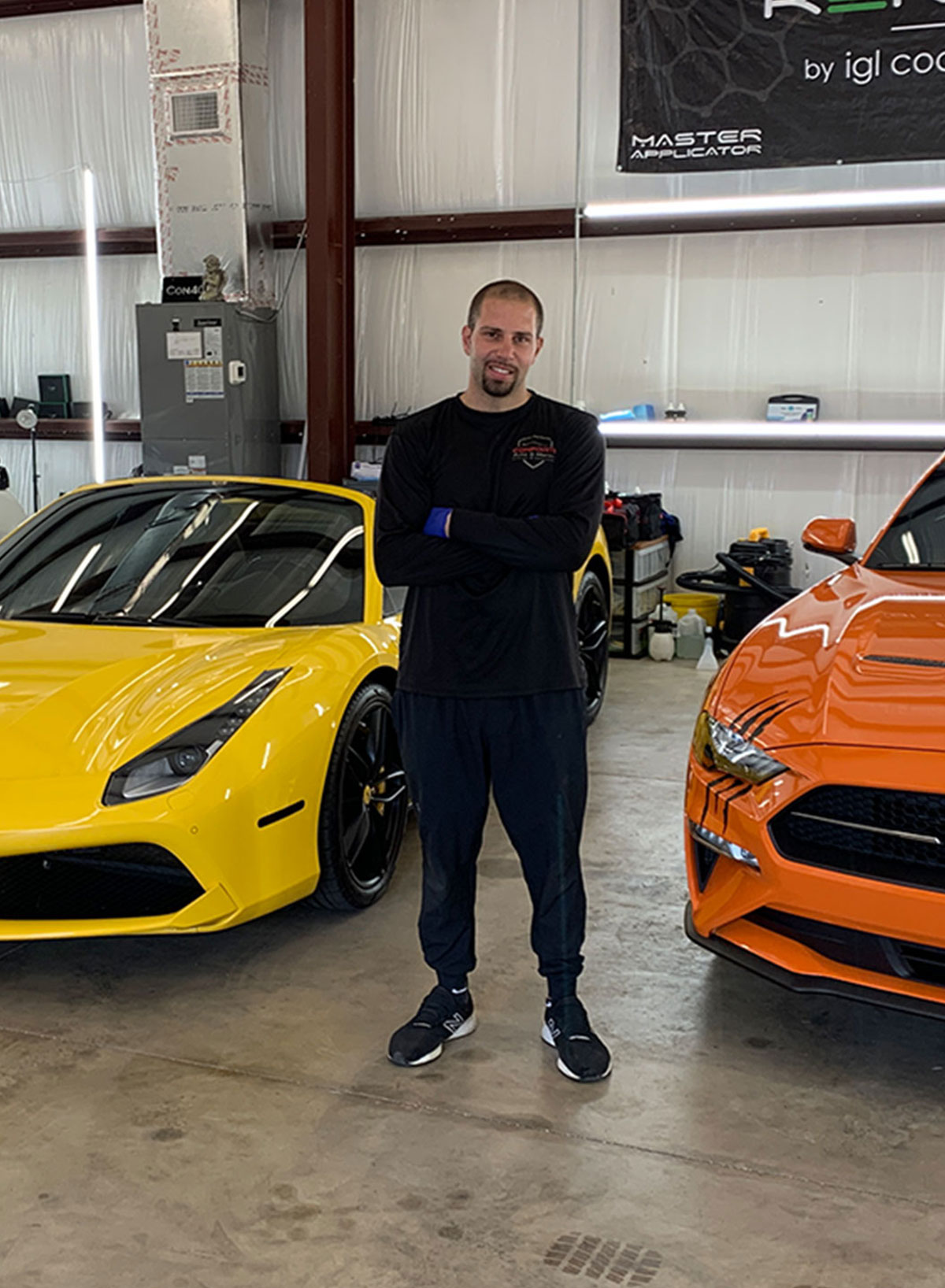
Walk through any parking lot and you’ll see it: glossy paint, everywhere, in every shade. Manufacturers love it, dealers love it, and most owners never think twice about it. But every so often a car rolls by with a deep, flat, almost liquid-stone finish that makes everyone turn their head — and there’s a good chance that car is wearing matte paint protection film. I’m Jeremy, and I’ve been installing protective films and coatings long enough to watch the matte trend go from rare to genuinely sought-after. Let me break down what this stuff actually is, how it works, and whether it’s the right move for your ride.
Why Glossy Cars Are Everywhere (And Why Matte Stands Out)
Gloss is the default for a reason. It’s cheaper to produce, easier to repair, and it photographs well on a dealer lot under bright lights. The vast majority of vehicles sold in the U.S. leave the factory with a high-gloss clear coat, which is exactly why a matte finish reads as deliberate. When everything around you shines, a flat finish signals that you made a choice.
That’s the psychology behind the stealth look. A matte black sedan or a satin gunmetal coupe doesn’t scream for attention with reflections — it pulls attention by being different. From what we’ve seen at the shop, the people drawn to matte finishes tend to be the same folks who appreciate restraint: they want presence without the flash. Performance cars, blacked-out SUVs, and luxury sedans wear it especially well.
A matte finish hides surface imperfections far better than gloss, since there are no mirror-like reflections to exaggerate every swirl or wave in the paint.
Here’s the catch most people don’t think about. A factory matte finish — the real ones from Audi, BMW, and a handful of others — is fragile and notoriously hard to maintain. One wrong wipe with a dirty towel and you’ve burnished a permanent shiny spot into it. That’s where matte paint protection film changes the equation entirely, giving you the stealth aesthetic on top of a finish that’s actually built to take a beating.
What Is Matte Paint Protection Film, Exactly?
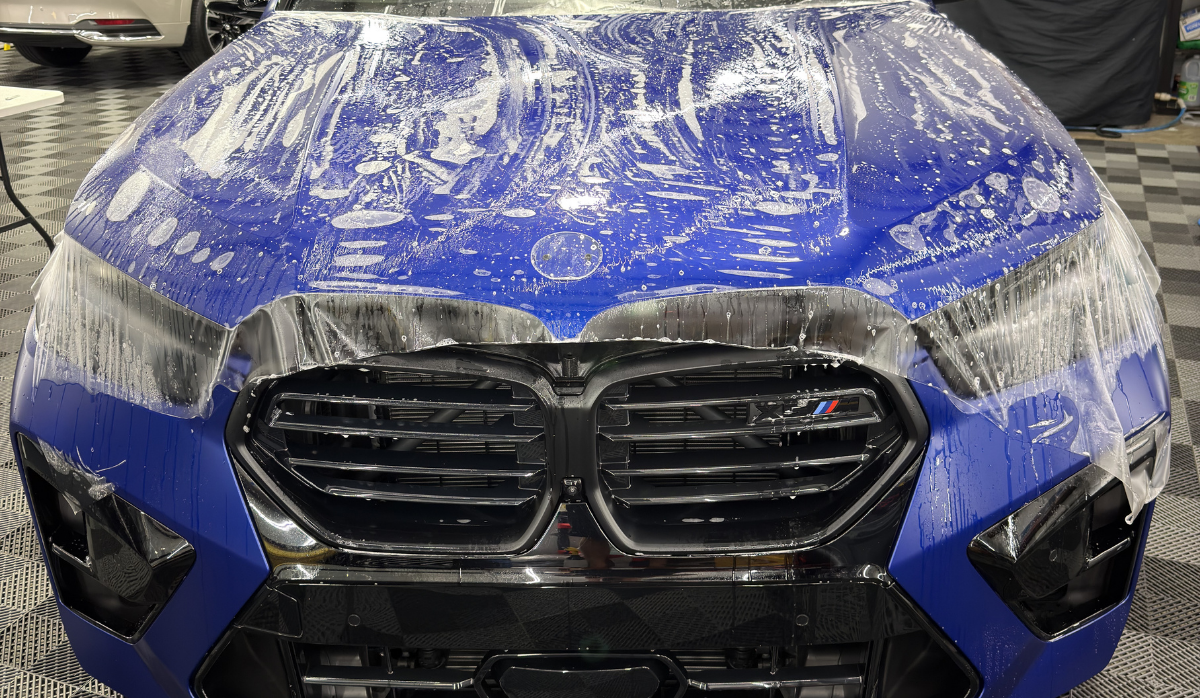
Matte paint protection film is a clear, thick layer of thermoplastic polyurethane — TPU film — applied directly over your vehicle’s painted panels. Standard PPF, sometimes called a clear bra, comes in a glossy finish that’s nearly invisible. Matte PPF is the same protective material with a frosted topcoat that diffuses light instead of reflecting it, turning any glossy panel underneath into a flat, even surface.
The protection itself is the real story. A quality matte clear bra runs around 8 mils thick, and that urethane layer absorbs the impact of road debris, gravel, bug acids, bird droppings, and the kind of low-speed parking lot scuffs that drive people crazy. The film is also self-healing — light scratches and swirl marks disappear when the surface warms up, whether from the sun or warm water. You won’t get a perfectly polishable matte surface the way you can with gloss, but the day-to-day scratch resistance is genuinely impressive.
Most premium films also include a hydrophobic top layer, so water beads and rolls off instead of sheeting and leaving spots. We install STEK film at our shop, and their matte products hold up to Florida’s brutal sun and humidity better than most. If you want the full breakdown of how film protection works on your specific vehicle, our team handles paint protection film in Palm Harbor and can walk you through coverage options in person.
What makes it "matte" instead of gloss?
The difference comes down to the film’s outer surface texture. A gloss film has a smooth, optically clear topcoat that reflects light like a mirror. A matte film has a microscopically textured surface that scatters that light in every direction, which is what kills the shine and produces that flat, stealthy appearance. Same protection underneath, completely different visual result.
How Matte PPF Transforms Your Paint Into a Stealth Finish
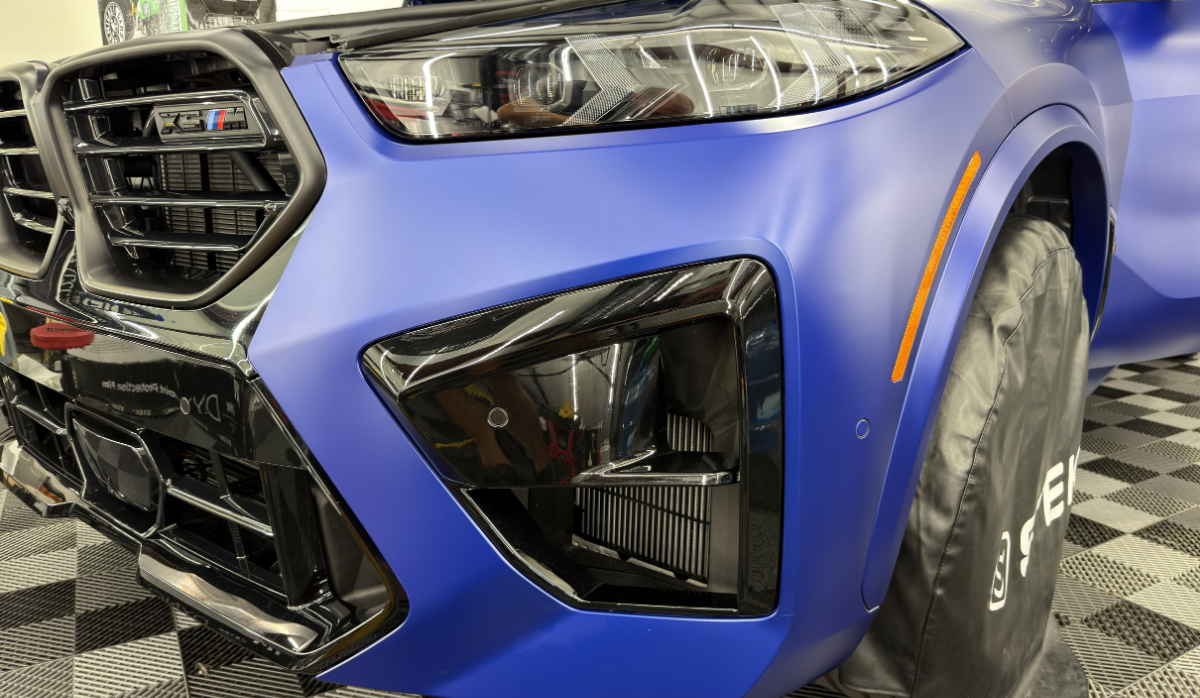
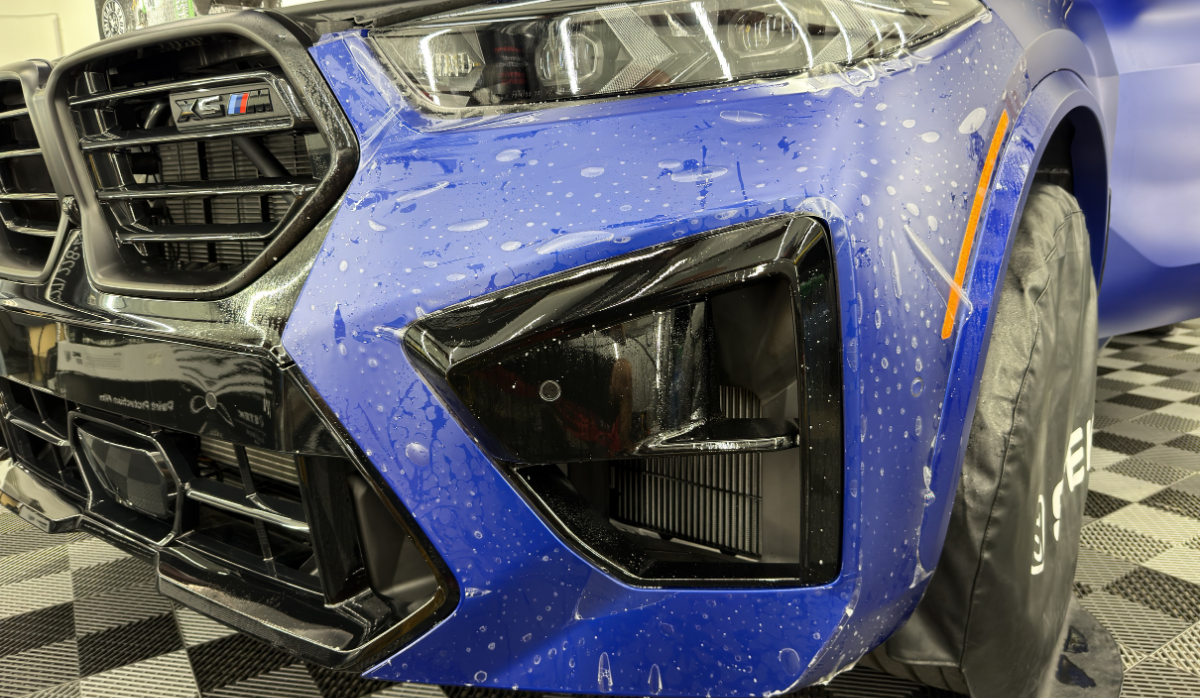
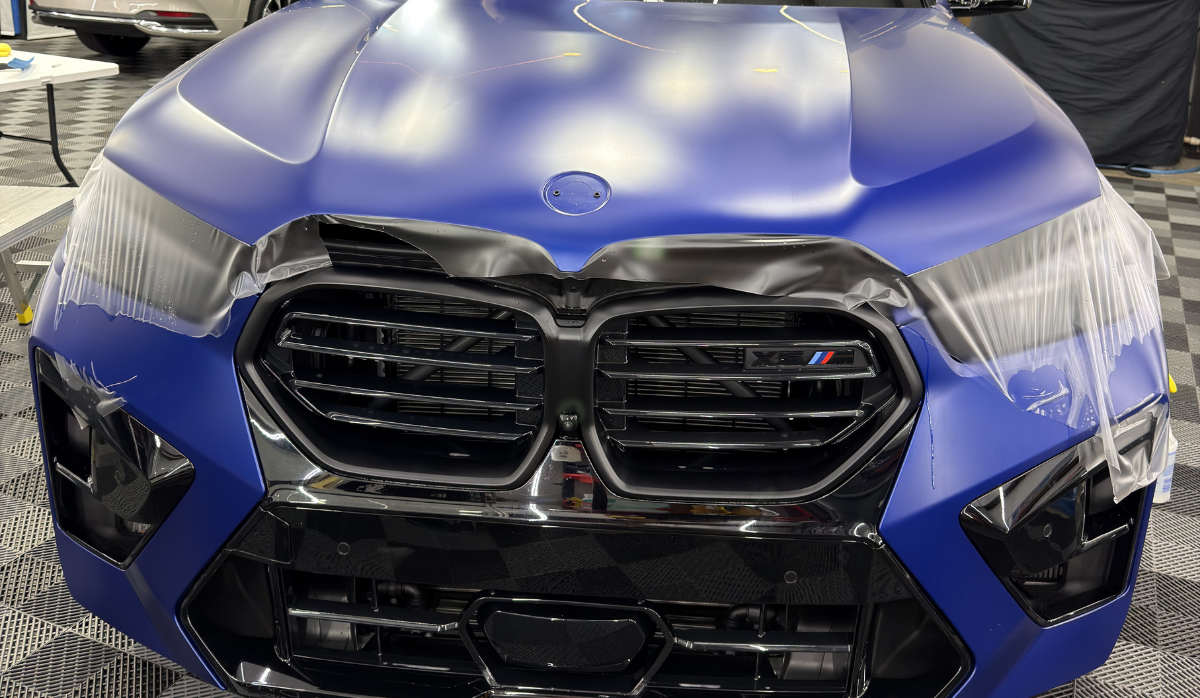
This is the part that surprises people. You can take a standard glossy black car straight off the lot and turn it into a stealth finish car without ever touching the factory paint. The matte film lays over your existing color, and the frosted topcoat converts that glossy surface into a uniform flat finish across every panel you cover. The color you started with shows through — it just loses its shine.
Coverage is flexible. Some clients want a full-vehicle wrap in matte for the complete blackout look, while others go with high-impact areas like the hood, fenders, mirrors, and front bumper to get protection where rock chips actually happen. In practice, a partial front-end install protects the zones that take 90% of road damage, but if your goal is the stealth aesthetic, you need full coverage so the whole car reads matte instead of mismatched.
I had a client last year with a deep blue metallic Tesla who wanted the satin stealth look without committing to a vinyl color change. We wrapped the entire car in matte PPF, and the result was a moody, flat blue that looked factory-custom — and it was fully protected against the shell driveways and crushed-shell roads that chew up paint all over the Gulf Coast. That’s the combination you can’t get from a wrap alone: real impact protection plus the finish you want.
A full matte PPF wrap typically costs more than a vinyl color change, but it’s the only option that physically defends your paint from rock chips while delivering the stealth look.
Matte PPF vs Matte Wrap: Which One Actually Protects Your Car?
This is the question I get most often, and the answer matters because the two products look similar in photos but do completely different jobs. A matte vinyl wrap is a thin, decorative film — usually 3 to 4 mils — designed to change color or finish. It’s an aesthetic product. A matte clear bra is a thick urethane shield engineered to absorb impacts and self-heal. One dresses your car up; the other defends it.
Here’s the practical difference. Drop a stone into a vinyl wrap at highway speed and the vinyl tears, leaving the paint underneath exposed and chipped. The same impact against matte PPF gets absorbed by the urethane, and the surface often heals itself with no lasting mark. Wraps also can’t self-heal — every scratch you put in vinyl stays there until you replace the panel.
So why do wraps still exist? Cost and color variety. Vinyl is cheaper and comes in hundreds of finishes and colors that PPF simply doesn’t offer. If you want a wild color or you’re changing your car’s look on a budget, vinyl wins. But if your priority is protecting the paint and your factory finish underneath, matte paint protection film is the only real answer in the matte PPF vs matte wrap debate. We’ve replaced plenty of torn wraps with film for clients who learned that lesson the hard way.
- Matte wrap: 3–4 mils, decorative, huge color range, no self-healing, tears on impact
- Matte PPF: ~8 mils, protective, limited finishes, self-healing, absorbs rock chips
- Lifespan: quality matte PPF typically lasts 7–10 years; vinyl wraps usually need replacing around 5
- Value: PPF protects resale by guarding the original paint; a torn wrap protects nothing
Satin vs Matte Finish PPF: Picking the Right Stealth Look for Your Ride
People use “matte” and “satin” interchangeably, but in the film world they’re two distinct finishes, and choosing between them changes the entire character of your car. A true matte finish PPF is completely flat — zero reflection, full stealth, the closest thing to a chalkboard texture you can put on a vehicle. Satin paint protection film offers a soft, low sheen that glows faintly under direct light.
Which one’s right depends on your color and your taste. Flat matte looks aggressive and modern on blacks, grays, and military-style greens — it leans into the tactical, blacked-out vibe. Satin tends to flatter metallics and deeper colors because that slight sheen lets the flake and depth show through instead of muting them completely. On the blue Tesla I mentioned earlier, satin was the right call because flat matte would’ve killed all the metallic shimmer in the paint.
From what we’ve seen, satin is the more forgiving choice for daily drivers. The slight sheen hides water spots and fingerprints a little better than dead-flat matte, which shows every smudge under the wrong light. If you’re torn between a gloss vs. matte finish altogether and matte feels too extreme, satin is the sweet spot—it reads as intentional and custom without the full stealth commitment.
My honest recommendation: if your paint is a rich metallic, go satin; if it’s a solid color and you want maximum stealth, go full matte.
This is the kind of decision worth talking through with an installer before you commit thousands of dollars. We help clients compare finishes side by side at our shop, and the same expertise carries across our other services—whether you’re after ceramic coating in Clearwater for added gloss protection or a finish consultation for a full build.
Caring for Your Matte Clear Bra So It Stays Flawless
Good news first: matte PPF is far easier to maintain than factory matte paint, which is one of the biggest reasons people choose it. The hydrophobic topcoat sheds water and grime, and the self-healing layer takes care of light surface marks on its own. That said, matte finishes do have a few strict rules, and breaking them is how people ruin an otherwise perfect install.
The cardinal rule is no wax, no polish, and no gloss-enhancing products of any kind. Anything designed to add shine will fill the microscopic texture of the matte surface and leave permanent glossy streaks you can’t buff out. Use a dedicated matte-safe shampoo and matte-specific spray sealants only—products formulated to clean without changing the finish. We point clients toward maintenance lines built specifically for matte and satin film.
Wash technique matters just as much. Always rinse the panel thoroughly before touching it so you’re not dragging grit across the surface, use two buckets to keep your wash mitt clean; and dry with a soft microfiber or a gentle blower rather than scrubbing. Skip automatic brush car washes entirely—those spinning bristles are matte film’s worst enemy. Here’s a quick rundown of what actually works:
- Rinse the whole panel first to flush off loose dirt and grit
- Wash with a pH-neutral, matte-safe shampoo using the two-bucket method
- Spot-treat bug splatter and bird droppings quickly—Florida heat bakes them on fast
- Dry with a clean microfiber or air blower, never a circular scrubbing motion
- Use only matte-specific sealants, and never anything that promises shine
Handle it right and a quality matte clear bra will hold its finish for the better part of a decade. We’ve seen STEK matte installs from 2021 still looking sharp with nothing more than proper washing. If you ever do get a stubborn mark, warm water or a heat gun on low can reactivate the self-healing layer and pull out light scratches—a trick that genuinely feels like magic the first time you watch it work.
Ready for a Stealth Finish? Get Your Free Quote from Conforti Detailing
Matte paint protection film is the one product that lets you stop choosing between style and protection. You get the head-turning stealth finish that pulls attention in a sea of glossy cars, plus a self-healing TPU shield that guards your factory paint from the rock chips, bug acids, and UV damage that come standard with driving around Tampa Bay. That’s not a compromise — that’s having it both ways.
Every vehicle is a little different, though. The right call between satin and flat matte, full coverage versus front-end protection, and how the film will read on your specific color all come down to seeing the car in person. That’s why I give every client a straight, no-pressure breakdown and a free quote before any work starts. We protect cars, motorcycles, boats, and RVs across the region, so whether you’re after a stealth wrap for your daily driver or you want to talk through options for your motorcycle detailing needs, we’ve got you covered.
Stop by, send us a few photos, or reach out for a quote and let’s figure out the right stealth finish for your ride. You bring the vision — I’ll bring the honest advice and the film that actually protects what’s underneath.

Frequently Asked Questions
Matte paint protection film is a clear, self-healing urethane (TPU) layer applied over your car's factory paint that creates a flat, non-reflective stealth finish. On top of the look, it physically shields your paint from rock chips, scratches, and UV damage. You get the stealth aesthetic and real protection in a single product.
A matte wrap is a thin vinyl applied for looks but offers very little impact protection, and it can't heal swirls or minor scratches. Matte paint protection film is a thicker urethane that physically guards against rock chips and self-heals minor marks with heat. In short, a wrap changes the appearance while matte PPF changes the appearance and protects the paint underneath.
Yes—the urethane top layer is engineered to reflow with heat, so light swirls and fine scratches disappear on their own. A warm day, the sun, or a bucket of warm water is usually enough to trigger the healing. Just keep in mind that deep gouges through the film won't heal, but everyday surface marks typically vanish.
Pricing depends on coverage, vehicle size, and the complexity of the panels, but partial front-end coverage often starts in the low four figures and a full-vehicle wrap can run several thousand. Matte PPF usually costs a bit more than gloss because the film and installation demand extra precision. The best move is to get a free quote based on your exact vehicle and the coverage you want.
A front-end or partial install typically takes one to two days, while a full-vehicle application can run three to five days depending on the car. Matte film requires careful, patient work because seams and edges show more on a flat finish. We never rush it — proper cleaning, alignment, and curing time are what make the result last.
Absolutely — this is one of the biggest advantages of matte paint protection film. The film transforms your glossy factory paint into a flat stealth finish without any permanent change to the original surface. If you ever want to go back to gloss, the film can be removed to reveal the protected paint underneath.
Wash by hand with a pH-neutral soap made for matte surfaces, and avoid automatic car washes with abrasive brushes. Never use gloss-enhancing waxes or polishes, since they can create shiny streaks on the flat finish. Drying with a clean microfiber and spot-treating bird droppings quickly will keep your stealth look consistent for years.
If you want a head-turning stealth finish plus genuine protection from chips, scratches, and UV fading, matte PPF delivers both in one product. It's especially worth it on performance cars, blacked-out SUVs, and luxury sedans where the look pays off and the paint is expensive to repair. I'm happy to walk you through your options and put together a free quote so you can decide with all the facts.